[Editor's Note] I'm going to post here my second viewing of the museum's exhibits.
I had already posted a review with the same exhibition on another blog, but very few people found it. I thought that posting it in English again would not only broaden the readership but also encourage others to try the method I used for appreciation.
Above all, the art works introduced here, including those from the Lee Kun-hee Collection, are paintings worthy of pride anywhere in the world.
⇒ In the Korean version
I visited the National Museum of Modern and Contemporary Art (MMCA) in Gwacheon to see a new exhibition, and partly to see the autumn foliage.
Perhaps because many people like me had come to the museum for the fall colors, a long line of cars formed at the parking lot entrance. However, only the ginkgo trees and a few deciduous trees had turned color. The fountain in front of the museum, which had sprayed water in summer, had also stopped operating.
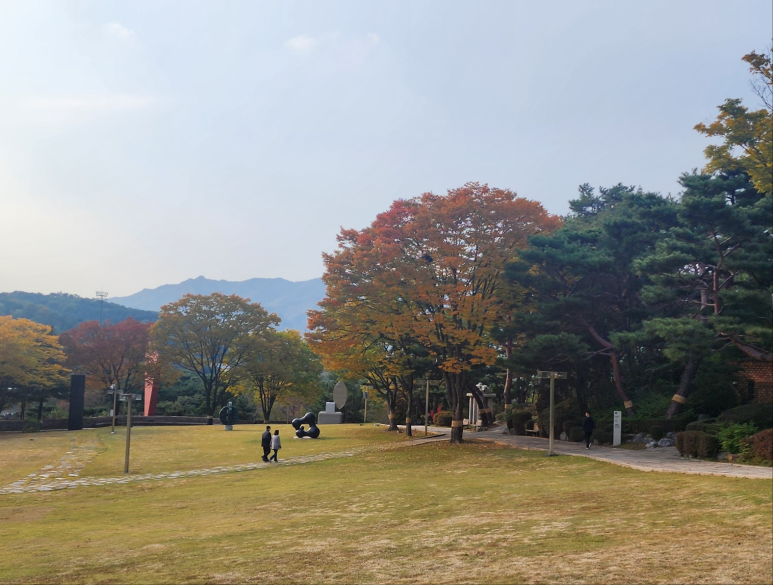
My purpose was to appreciate the art works, so I was looking forward to seeing Claude Monet's ‘Water Lilies’ and Ai Weiwei's ‘Black Chandelier’ from the new exhibition. However, contrary to my expectation that it would feature many overseas masterpieces, including Impressionist works, the exhibition was dominated by pieces from the Lee Kun-hee Collection, which had opened to great interest years ago.
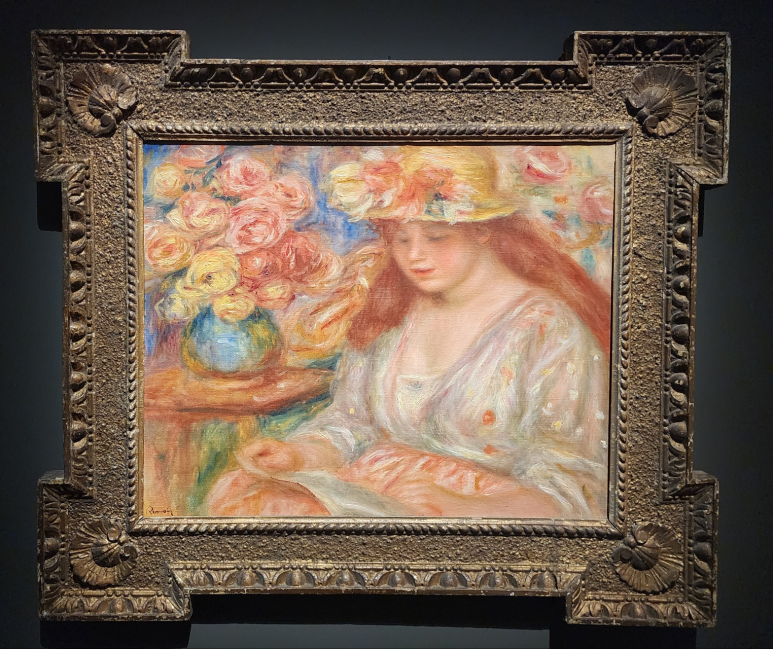
These were works from the Lee Kun-hee Collection now held by the MMCA: Monet's ‘Water Lilies’, a close friend of Monet, Renoir's ‘Girl with a Yellow Hat’, and Chagall's ‘Wedding Bouquet of Red Flowers’.
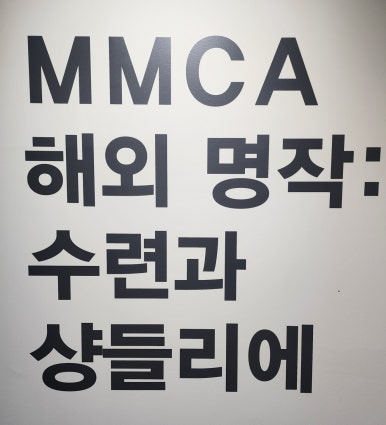
So I changed my approach to viewing.
I decided to imagine not only the works displayed this time, including the MMCA's permanent collection pieces, but also all related or evocative images.
First, after appreciating the ‘Water Lilies’ painting, I took an ‘I was there’ photo and posted it alongside a similar photo I had taken years ago when I visited Monet's garden and studio in Giverny, Normandy, France.
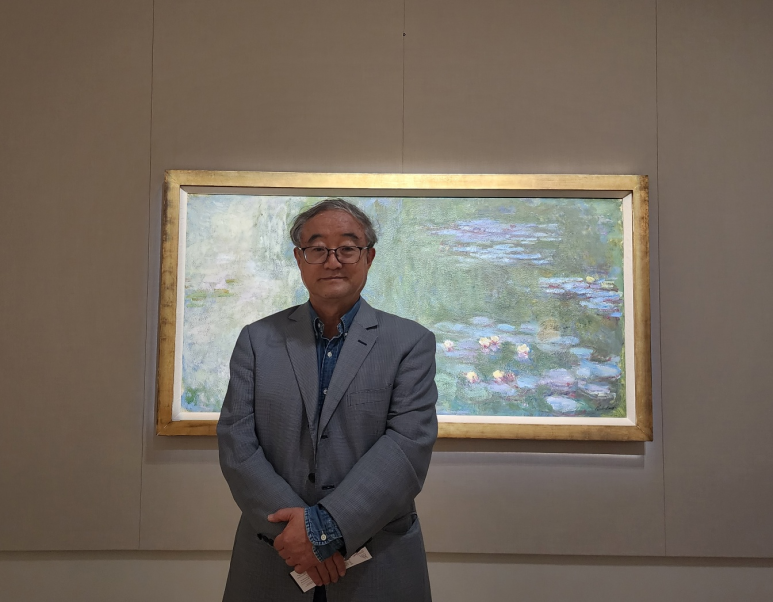
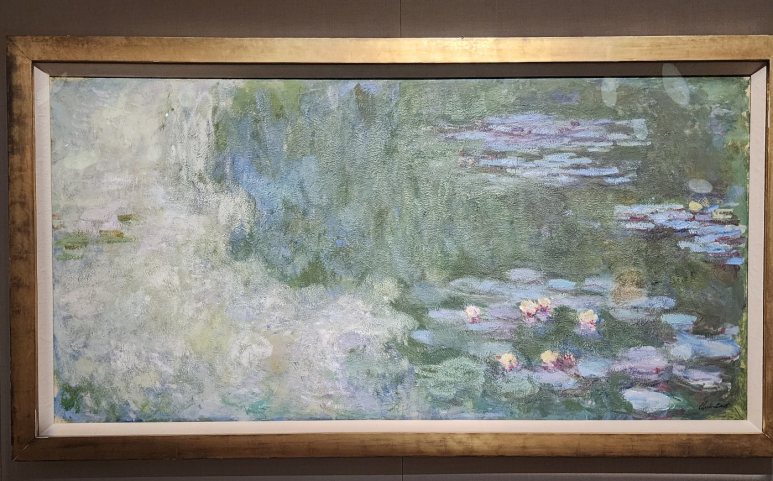
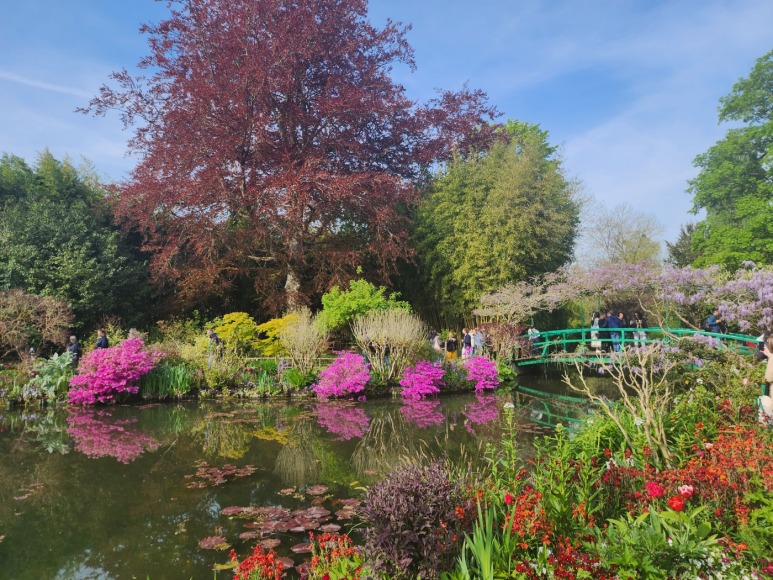
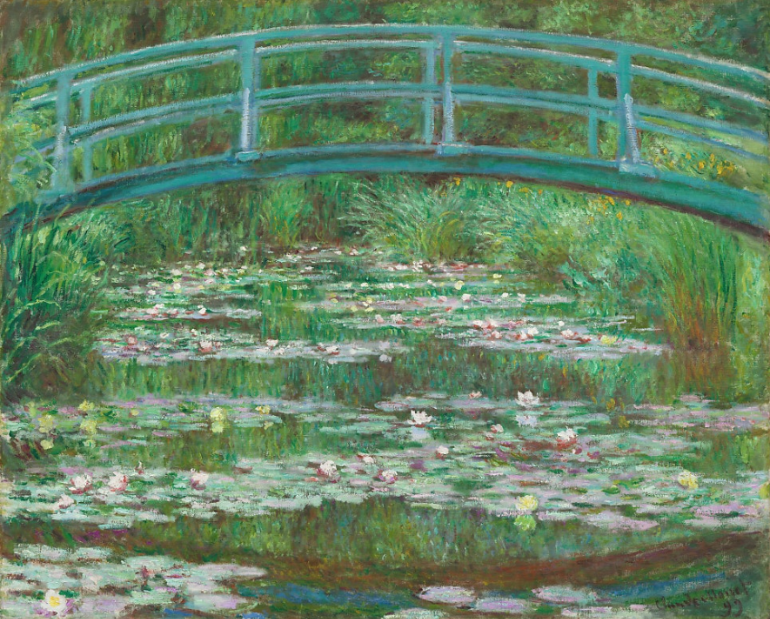
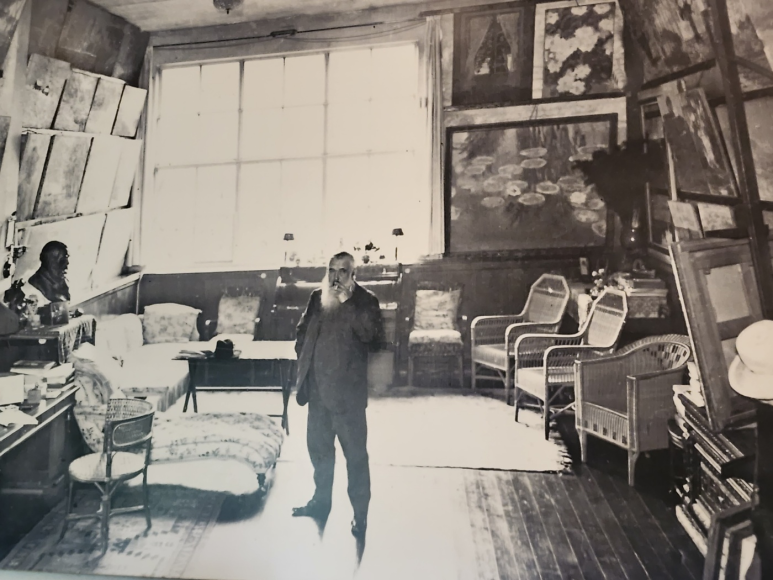
Monet's painting ‘Water Lilies’ was displayed so it could be viewed while seated.
Behind it, hung Renoir's warmly colored painting ‘André Reading, Wearing a Yellow Hat and Red Skirt’.
Monet and Renoir met while studying at the Paris Academy of Fine Arts in the 1860s. They bonded over their shared rebellion against traditional artistic conventions and their commitment to painting in the Impressionist style. However, when painting outdoors, Monet prioritized capturing the changing light and colors of nature, producing many landscapes. Renoir, on the other hand, primarily painted voluptuous women and flowers while applying Impressionist techniques.
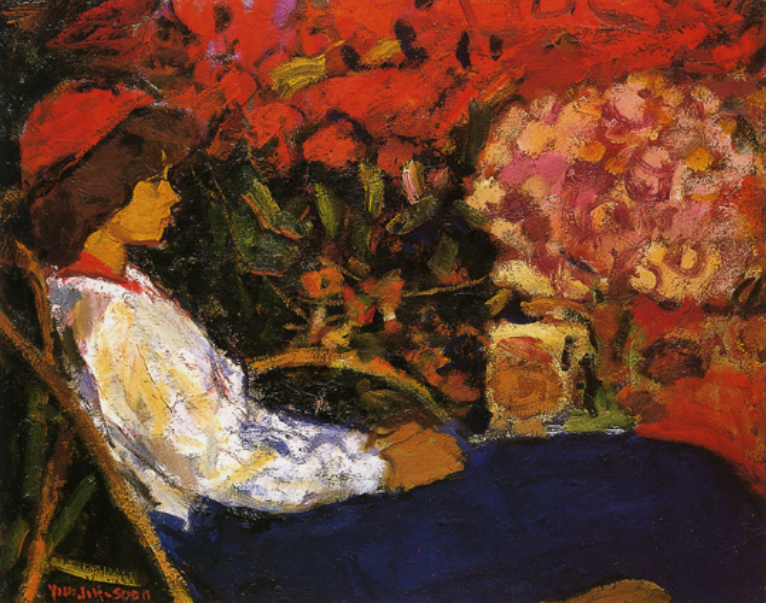
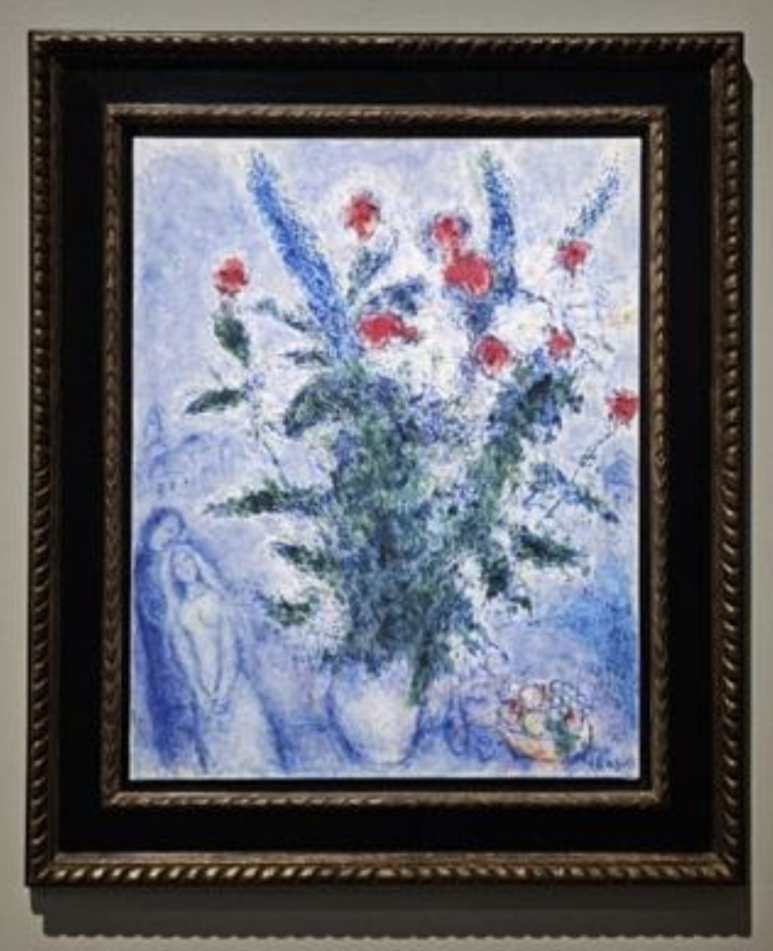
Having thoroughly examined the permanent collection before, this time I focused on works that caught my interest, following the viewing approach mentioned earlier. It's great that the MMCA has a separate exhibition hall dedicated to the works of Oh Ji-ho (1903-1982), a painter regarded as a pioneer of the Impressionist style in Korea's modern and contemporary art history.
It's great that the MMCA has a separate exhibition hall dedicated to the works of Oh Ji-ho (1903-1982), a painter regarded as a pioneer of the Impressionist style in Korea's modern and contemporary art history.
He studied Western painting at the Tokyo School of Fine Arts during the Japanese colonial period. After returning to Korea, he served as an art teacher at Songdo High School in Gaeseong. Later, he moved to his hometown in Jeollanam-do and worked as a professor at Chosun University in Gwangju, painting Korea's nature with bright, clear colors. In the 1970s, he traveled to Europe, including Germany, while continuing his artistic activities.
Oh Ji-ho focused on expressing subjects infused with life by sunlight through painting. Consequently, he was recognized for successfully blending the Impressionist style with Korean nature. From this perspective, his representative work, ‘South-Facing House,’ conveys a very warm feeling with its sunlit house, a dozing white dog, and a girl leaving the house.
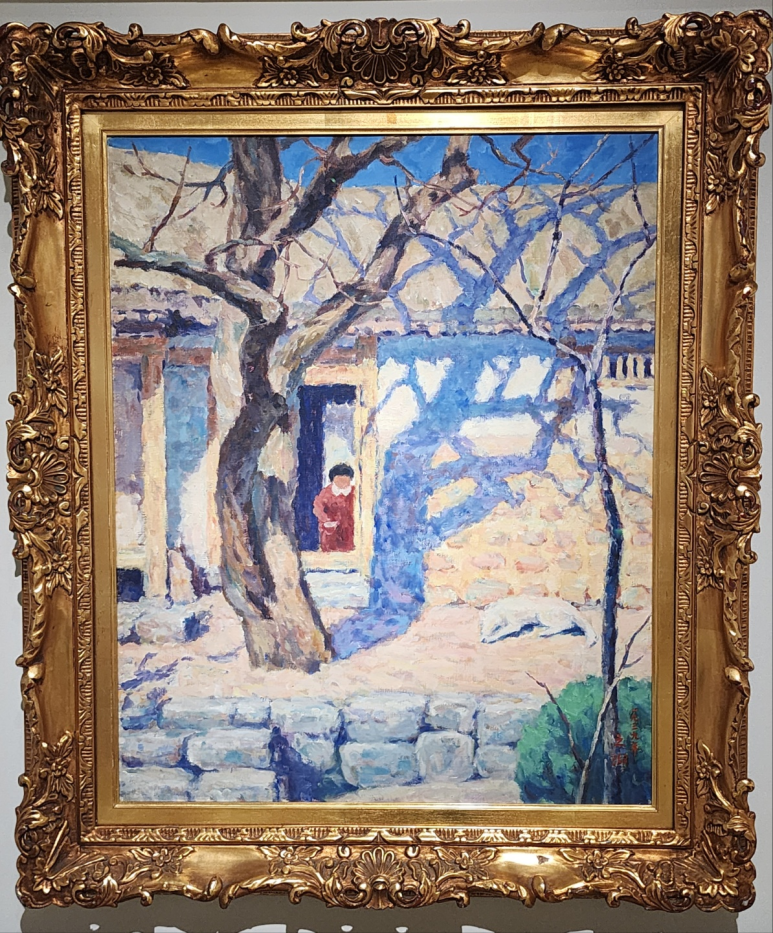
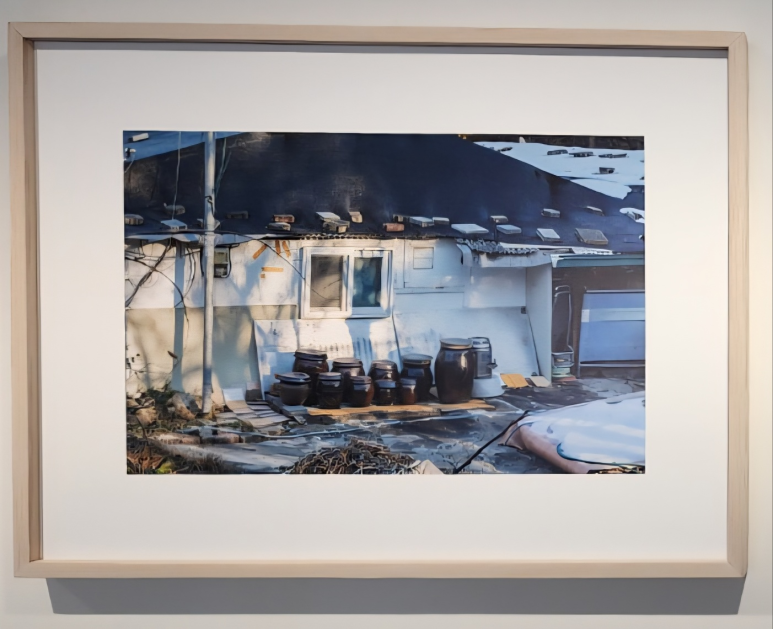
While viewing Oh Ji-ho's paintings, I recalled seeing similar photographic works by Professor Im Dae-soon last February. Professor Im, who retired as an engineering professor, became an amateur photographer and invited us to an exhibition he held with club members.
His photo work hung at the center of the gallery exhibition space in Samcheong-dong. It was a south-facing house that got plenty of sunlight, but it was a shabby house on the outskirts of Seoul, one that could be demolished at any moment. The artist asked us rhetorically, “Didn't most of us live in houses like this just one generation ago?” He said it seemed like an elderly person who cherished the traditional earthenware jars lived there, and that we had become like frogs who, intoxicated by economic development, had forgotten our tadpole days.
In the modern and contemporary art permanent exhibition hall, I discovered an abstract painting that looked like a very simple, clear figurative work.
It was ‘Mountain’ by abstract painter Yoo Young-kook (1916-2002), who spent his life painting abstract works using nature motifs like mountains, trees, and the sea. Triangles were arranged in four directions, and anyone could see it was an abstract representation of a mountain.
Although not exhibited at the Gwacheon Museum of Modern Art, painter Oh Ji-ho also depicted mountains through changing seasons using thick lines and simple colors.


A little further on the same floor, a very intense ink painting by artist Lee Jong-sang, who shifted his career from Western to Eastern painting, caught my eyes. The title was ‘Ink Play, Scattering the Dust and Noise’ (묵희/墨戱 쇄쇄진효/灑灑塵囂) — meaning to vigorously spray water from a waterfall to wash away the dust. An explanation stated it was painted as an allegory for the political situation in Korea during the 1980s.
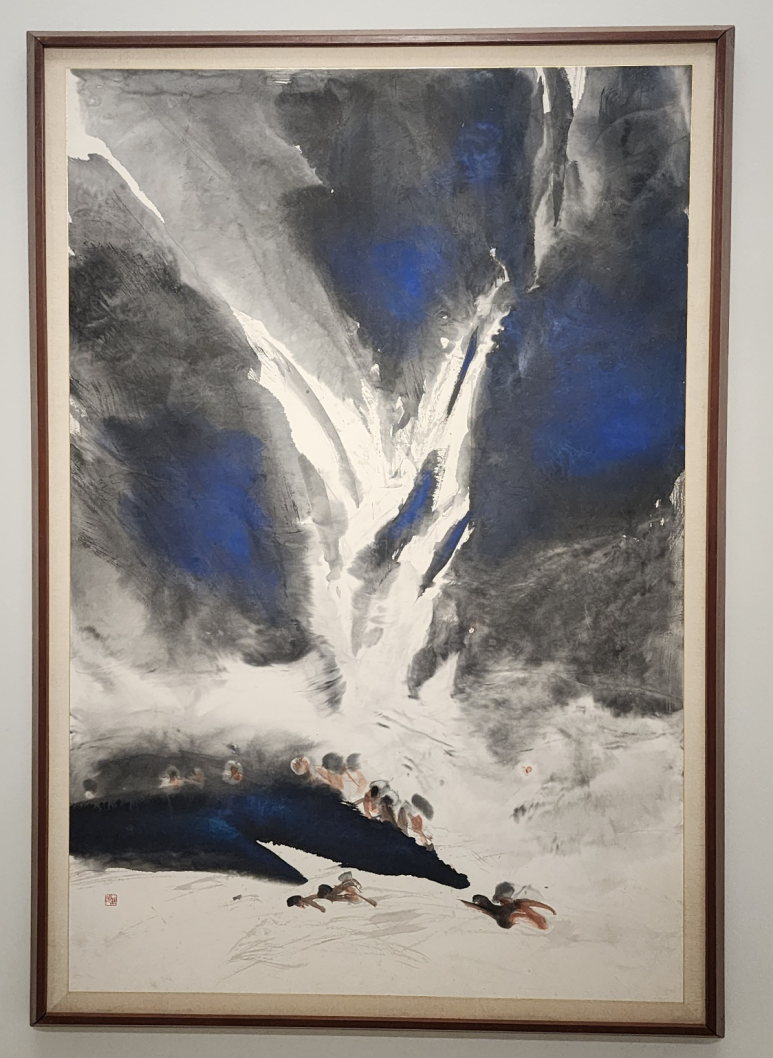
It reminded me how City Hall Square and Gwanghwamun Square, where the roars of citizens cheering the Red Devils team echoed during the 2002 World Cup, had become Korea's representative gathering and protest sites.
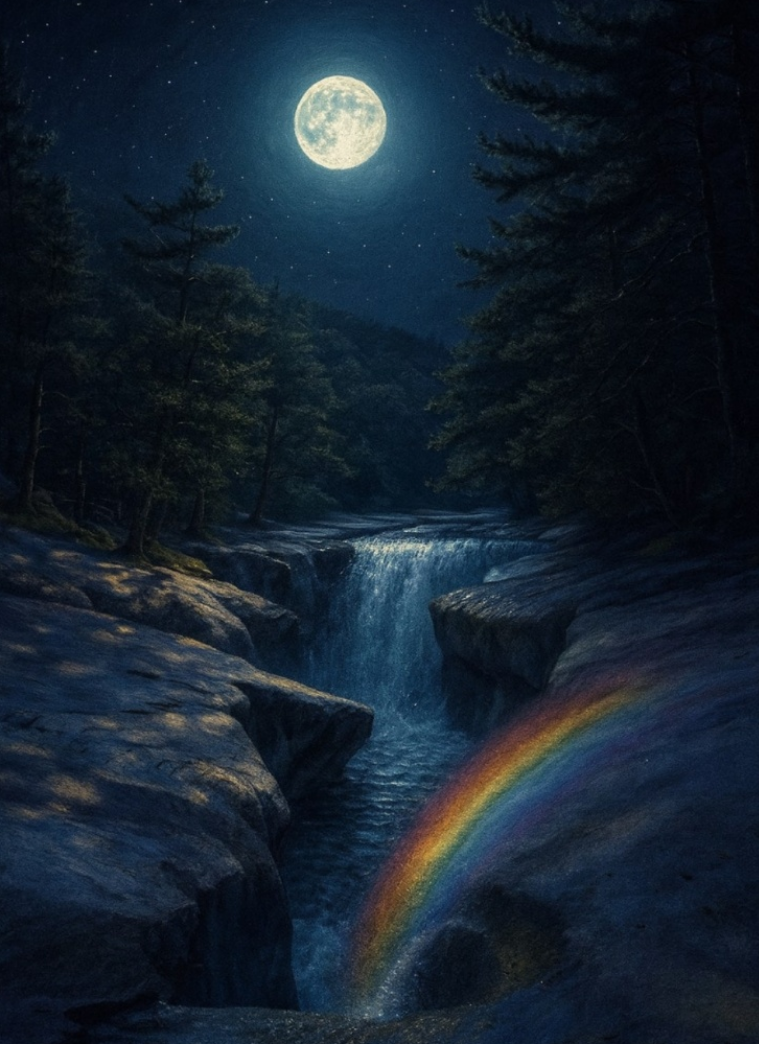
As I grow older, I find myself wishing for a quieter, more peaceful daily life. I imagined a serene scene where the same waterfall, illuminated by sunlight, displays a rainbow. Coincidentally, I heard that Busan poet Park Won-ho had used ChatGPT to create an image of a rainbow appearing in moonlight, so I've reproduced it here.
Next came the turn of artist Cheon Kyung-ja's nude painting, which made a very intense impression.
It was the work ‘Who's Crying II’, completed by Artist Cheon after months of labor pains, overcome with grief after losing her mother and husband.
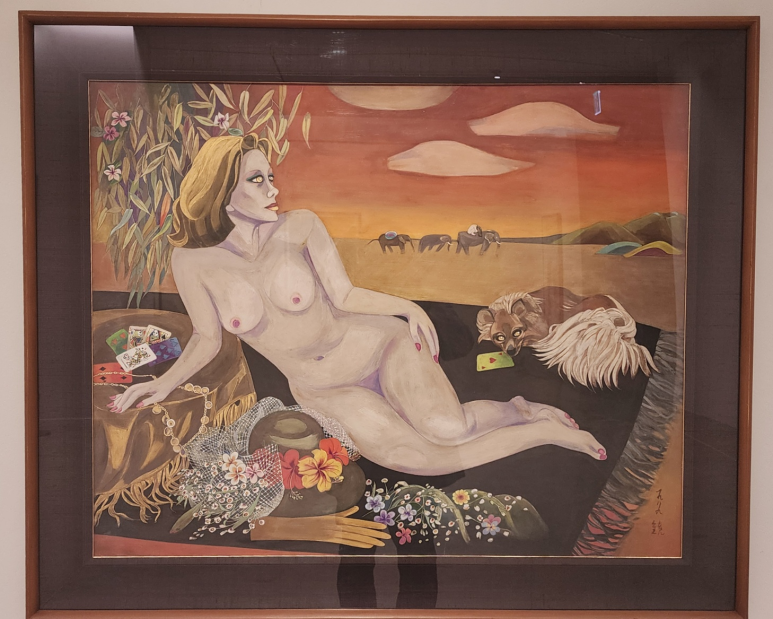
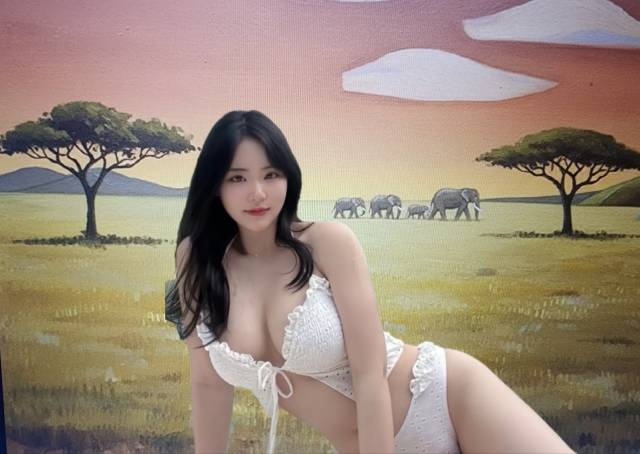
But as I looked back over the exhibition pieces, feeling somewhat tired, I irreverently(?) changed the painting's title.
I interpreted it as a young woman, accompanied by her pet dog, reclining diagonally on a carpet, yearning to return to her primal homeland, the African savannah. So, I asked Gemini's Imagine to draw the background of African landscape and selected a female lingerie model in a similar pose to sit there.
The above description showes how I appreciated the MMCA's permanent and special exhibition pieces in a unique way, associating them with other things.
Of course, many works in the exhibition also draw you in, compelling you to stare at them for a long time and immerse yourself in their world.
For instance, Lee Ufan's paintings and the very cleanly executed sculptures were like that.
And since photography was prohibited for Kim Whanki's works, I had to read the explanatory text at the entrance, gaze at the partitions decorated with hanji (Korean paper), or simply stare at them.
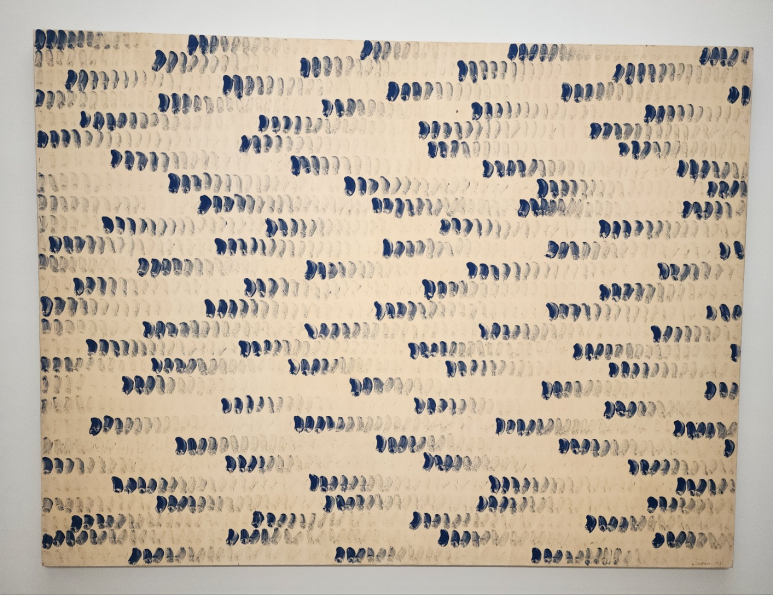

After completing my appreciation in this manner, I left the museum.
The flame of Nam June Paik's video art, ‘More is Better’, had already been extinguished. Yet the art and beauty he sought to illuminate will undoubtedly continue to shine within our lives.
'In English' 카테고리의 다른 글
| [기록7] Privacy@40 Workshop in Bellagio (1) | 2025.10.02 |
|---|---|
| [Drama] When Life Gives You Tangerines (1) | 2025.04.12 |
| [Travel] Enjoying Exotic Jeju Island (8) | 2024.09.21 |
| [Memo] 미국 생활 단상 (11) | 2024.08.28 |
| [Book's Day] Archetype of Missions Overseas (0) | 2024.05.13 |